
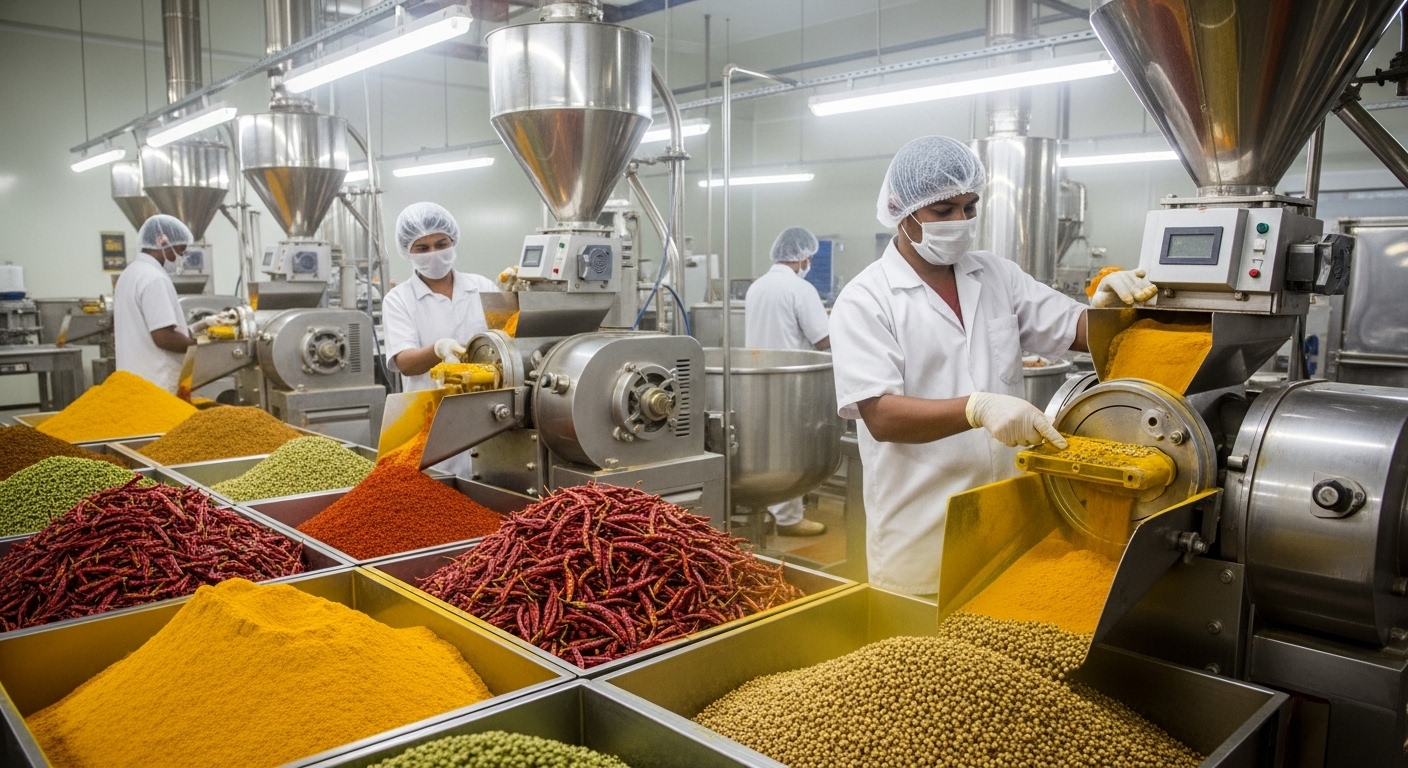
Spice Processing Unit – Complete Business Guide
Introduction to Spice Processing Business
A spice processing unit is one of the most profitable and sustainable medium-scale businesses, especially in a spice-rich country like India, which is known as the largest producer and exporter of spices in the world. Spices such as turmeric, chilli, coriander, cumin, and garam masala are essential ingredients in every Indian kitchen, ensuring constant demand throughout the year. A spice processing business involves cleaning, drying, grinding, blending, packaging, and distributing spices in powdered or whole form. With increasing demand for hygienic, branded, and ready-to-use मसाले, this business offers excellent growth opportunities both in domestic and international markets.
Business Plan and Model
To start a spice processing unit, the first step is to decide your product range. You can focus on single spices like turmeric powder and chilli powder or create blended मसाला products such as garam masala, pav bhaji masala, and kitchen king masala. The next step is sourcing high-quality raw spices directly from farmers or wholesale markets to ensure cost efficiency and quality. The processing unit requires machines like cleaning machines, pulverisers (grinders), dryers, mixing machines, and packaging machines. It is mandatory to obtain licenses from the Food Safety and Standards Authority of India to ensure food safety compliance. You can sell your products under your own brand or supply to retailers and wholesalers. Distribution can be done through local markets, supermarkets, and online platforms like Amazon and Flipkart.
Startup Cost and Investment
The investment required for a medium-scale spice processing unit typically ranges between ₹15 lakh and ₹40 lakh, depending on the scale of production and level of automation. Major expenses include machinery (₹8–₹20 lakh), factory setup or rental, raw material procurement, packaging materials, labour costs, and branding. Additional costs include licensing, electricity setup, and initial marketing. Working capital for at least 3–6 months is necessary to manage production and supply cycles. If you start with limited products and semi-automatic machines, you can reduce the initial investment and scale gradually.
Profit Margin and Revenue Potential
The spice processing business offers attractive profit margins ranging from 25% to 50%, depending on the product and branding. Basic spices like turmeric and chilli powder have moderate margins but high demand, while blended मसाले offer higher profit margins due to value addition. For example, raw turmeric purchased at a lower price can be processed and sold at double the cost after grinding and packaging. With effective branding and distribution, a medium-scale unit can generate monthly revenues between ₹3 lakh to ₹15 lakh or more. As the brand gains recognition, profit margins and sales volume increase significantly.
Target Audience
The target audience for spice products is vast and includes households, restaurants, hotels, catering businesses, and food manufacturers. Urban and semi-urban consumers prefer packaged मसाले due to hygiene and convenience. Additionally, restaurants and food service providers require bulk quantities of spices, making them a valuable B2B segment. Export markets also present a huge opportunity, especially for Indian spices, which are in high demand globally. Niche segments like organic spices and chemical-free products are gaining popularity among health-conscious consumers.
Marketing Strategy
A strong marketing strategy is essential to build a successful spice brand. Start with attractive and hygienic packaging that highlights quality and freshness. Branding should focus on authenticity, purity, and taste. Digital marketing plays a key role—use platforms like Instagram and Facebook to promote your products with engaging content such as cooking videos and recipes. Collaborating with food bloggers and influencers can increase brand awareness. Listing products on e-commerce platforms like Amazon helps reach a wider audience. Offline strategies include distributing free samples, offering discounts, and building relationships with retailers and wholesalers. Participating in food exhibitions and trade fairs can also boost visibility.
Operations and Management
Efficient operations are crucial for maintaining quality and consistency. The process begins with sourcing raw spices, followed by cleaning to remove dust and impurities. The spices are then dried to reduce moisture content and ground into powder using pulverisers. Blending is done for mixed मसाले, ensuring consistency in taste and aroma. The final product is packed using sealing machines in moisture-proof packaging to maintain freshness. Hiring skilled workers for production, quality control, and packaging is essential. Maintaining hygiene standards and proper storage conditions is critical to prevent contamination. Inventory management systems help track stock levels and reduce wastage. Logistics and distribution should be well-organised to ensure timely delivery.
Growth Opportunities and Expansion
The spice processing business offers immense growth potential. Once the brand is established, you can expand your product line by introducing new मसाला blends and premium variants. Entering export markets can significantly increase revenue, especially in countries with a large Indian population. Collaborating with supermarkets and large retail chains can boost distribution. You can also launch your own website for direct sales, increasing profit margins. With rising health awareness, introducing organic and chemical-free spices can attract premium customers. Over time, your business can grow into a recognised national or international spice brand.
Conclusion
A spice processing unit is a highly profitable and scalable medium-scale business with consistent demand and strong growth potential. With proper planning, quality control, effective branding, and smart marketing strategies, entrepreneurs can build a successful business in this sector. Although it requires initial investment and compliance with food safety regulations, the long-term benefits and expansion opportunities make it an excellent business choice for aspiring entrepreneurs.
- Tags:
- 101 Spices Business
- How to setup masala factory
- How to Start a Masala Business in India?
- How to start a spice business online in India?
- How to Start a Spice Packaging Business in India: 2026
- How to start a spices business step-by-step
- How to start best spice processing unit in india
- How to start best spice processing unit in maharashtra
- How to start best spice processing unit pdf
- How to Start Spice Grinding Business in India
- Setup spices industry business
- Spice manufacturing business plan
- Spice processing business
- Spice Processing Business Plan: High-Profit MSME Setup
- Spices business course
- Spices Repacking business
- Spices startup in India
