
Dairy Product Plant – Complete Business Guide
Introduction to Dairy Product Business
A dairy product plant is one of the most stable and profitable medium-scale business opportunities, especially in a country like India, the world’s largest milk producer. Dairy products such as milk, paneer, butter, ghee, curd, cheese, and flavored milk are daily essentials in Indian households, ensuring consistent demand throughout the year. With growing urbanization, rising health awareness, and increasing consumption of protein-rich foods, the dairy industry continues to expand rapidly. A dairy processing plant involves collecting raw milk, processing it under hygienic conditions, and converting it into value-added products for retail and wholesale markets.
Business Plan and Model
The first step in starting a dairy product plant is deciding on your product range. You can begin with basic products like milk, curd, and paneer, and later expand into butter, ghee, cheese, and flavored dairy beverages. The business model can be either B2C (selling directly to consumers) or B2B (supplying to hotels, restaurants, and retailers). Sourcing high-quality raw milk from local farmers or dairy cooperatives is crucial for maintaining product quality. Setting up a processing unit requires equipment such as milk chillers, pasteurizers, homogenizers, separators, and packaging machines. It is mandatory to obtain licenses from the Food Safety and Standards Authority of India to ensure compliance with food safety standards. You can distribute products through local vendors, supermarkets, and online platforms like Amazon and Flipkart.
Startup Cost and Investment
The investment required for a medium-scale dairy product plant typically ranges from ₹20 lakh to ₹1 crore, depending on the production capacity and product variety. Major costs include land or factory setup, machinery (₹10–₹50 lakh), milk procurement, cold storage systems, packaging materials, labor, and transportation. Refrigeration and cold chain infrastructure are essential to maintain product freshness and quality. Additional expenses include licensing, branding, and initial marketing. Working capital for at least 3–6 months is necessary to manage operations smoothly, especially considering the perishable nature of dairy products.
Profit Margin and Revenue Potential
The dairy business offers moderate to high profit margins ranging from 15% to 35%, depending on the product category. Basic products like milk have lower margins but high volume sales, while value-added products like paneer, cheese, butter, and flavored milk offer higher profitability. For example, converting milk into paneer or ghee significantly increases its market value. A well-managed dairy plant can generate monthly revenues between ₹5 lakh and ₹25 lakh or more, depending on scale and distribution. As brand recognition and product range increase, profit margins and revenue potential improve substantially.
Target Audience
The target audience for dairy products includes households, restaurants, hotels, sweet shops, bakeries, and food processing industries. Urban and semi-urban consumers prefer branded dairy products due to quality assurance and hygiene. Health-conscious consumers are also a growing segment, especially for products like low-fat milk, organic dairy, and protein-rich items. Additionally, institutional buyers such as schools, hospitals, and catering services offer bulk sales opportunities.
Marketing Strategy
A strong marketing strategy is essential to building a successful dairy brand. Focus on branding that highlights freshness, purity, and quality. Packaging should be hygienic, leak-proof, and visually appealing. Digital marketing through platforms like Instagram and Facebook can help promote products with engaging content, such as recipes and health tips. Collaborating with local vendors, supermarkets, and milk delivery services ensures wide distribution. Offering free samples, discounts, and subscription-based milk delivery can attract and retain customers. Building trust through consistent quality and timely delivery is key to long-term success.
Operations and Management
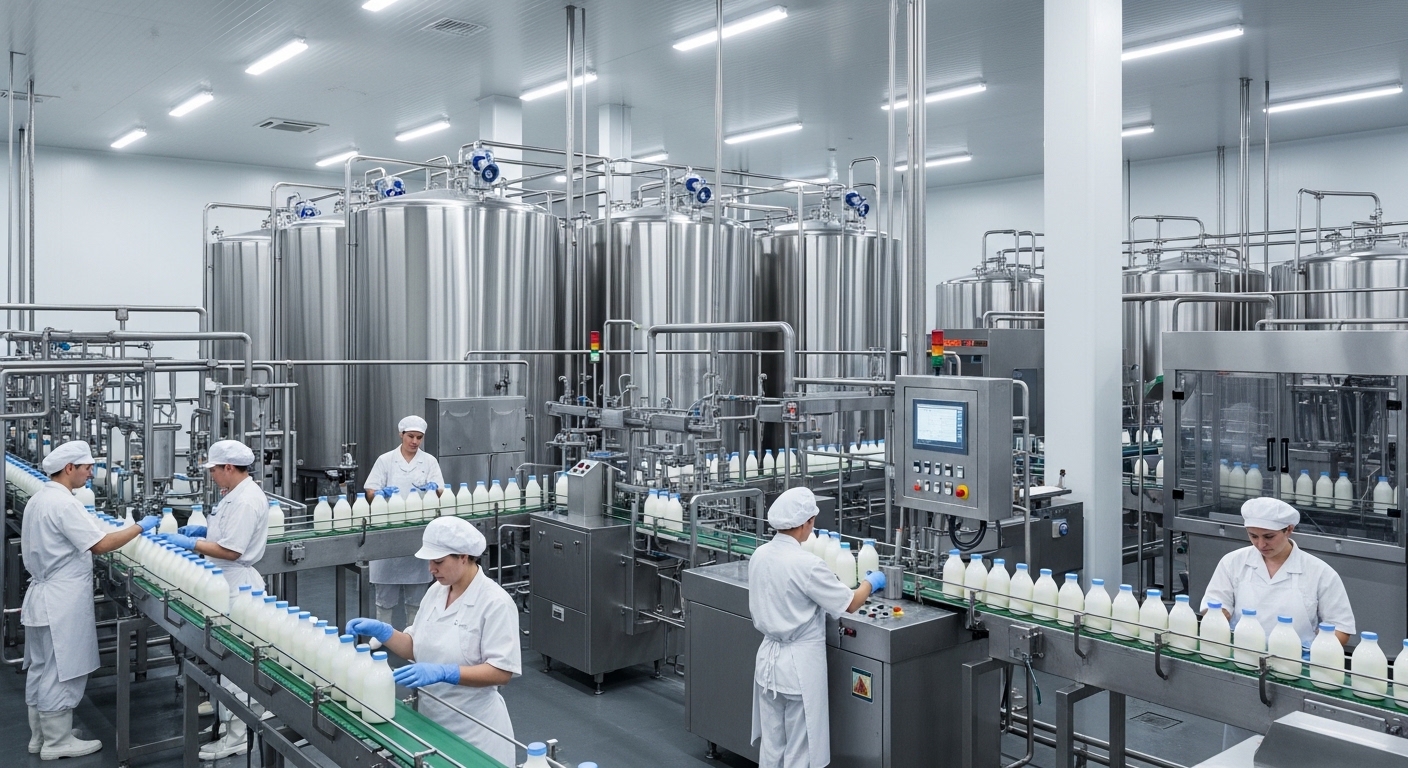
Efficient operations are critical in a dairy plant due to the perishable nature of products. The process begins with collecting raw milk from farmers and transporting it under refrigerated conditions. The milk is then pasteurized to eliminate harmful bacteria and homogenized for uniform consistency. Depending on the product, further processing is done to produce curd, paneer, butter, or cheese. Packaging is done in hygienic conditions using automated machines to ensure safety and shelf life. Hiring skilled staff for production, quality control, and logistics is essential. Maintaining strict hygiene standards and cold storage facilities is crucial to prevent spoilage. Inventory and supply chain management should be optimized to ensure timely delivery and minimal wastage.
Growth Opportunities and Expansion
The dairy industry offers vast growth opportunities. Once your plant is established, you can expand your product line by introducing premium and value-added products such as flavored milk, ice cream, and specialty cheeses. Entering new markets, including rural and international markets, can significantly increase revenue. Collaborating with large retail chains and launching your own distribution network can improve market reach. With increasing demand for healthy products, introducing organic and lactose-free dairy items can attract new customer segments. Over time, your business can evolve into a well-known regional or national dairy brand.
Conclusion
A dairy product plant is a highly reliable and scalable medium-scale business with consistent demand and strong growth potential. With proper planning, quality control, efficient operations, and effective marketing, entrepreneurs can build a successful and sustainable business in this sector. Although it requires significant investment and careful management, the long-term returns and expansion opportunities make it an excellent choice for aspiring business owners.
- Tags:
- 10 cow dairy farm income
- buttermilk
- curd
- dairy
- Dairy farm business government subsidy
- Dairy Processing Plant in India: Investment
- Dairy products business plan pdf
- dairy products plant cost 2026
- diary products
- diary products plant
- How to Start a Dairy Business in India: A Simple Guide
- How to start best dairy product plant in india
- How to Start Dairy Product Business in India
- How to start milk dairy in my village
- khoya
- lassi
- milk
- Milk business ideas from home
- Milk business startup
- Milk dairy business investment
- planning to start new dairy plant
- Profit & Setup
- Small Dairy Processing Plant in India 2026
- what is dairy products
