
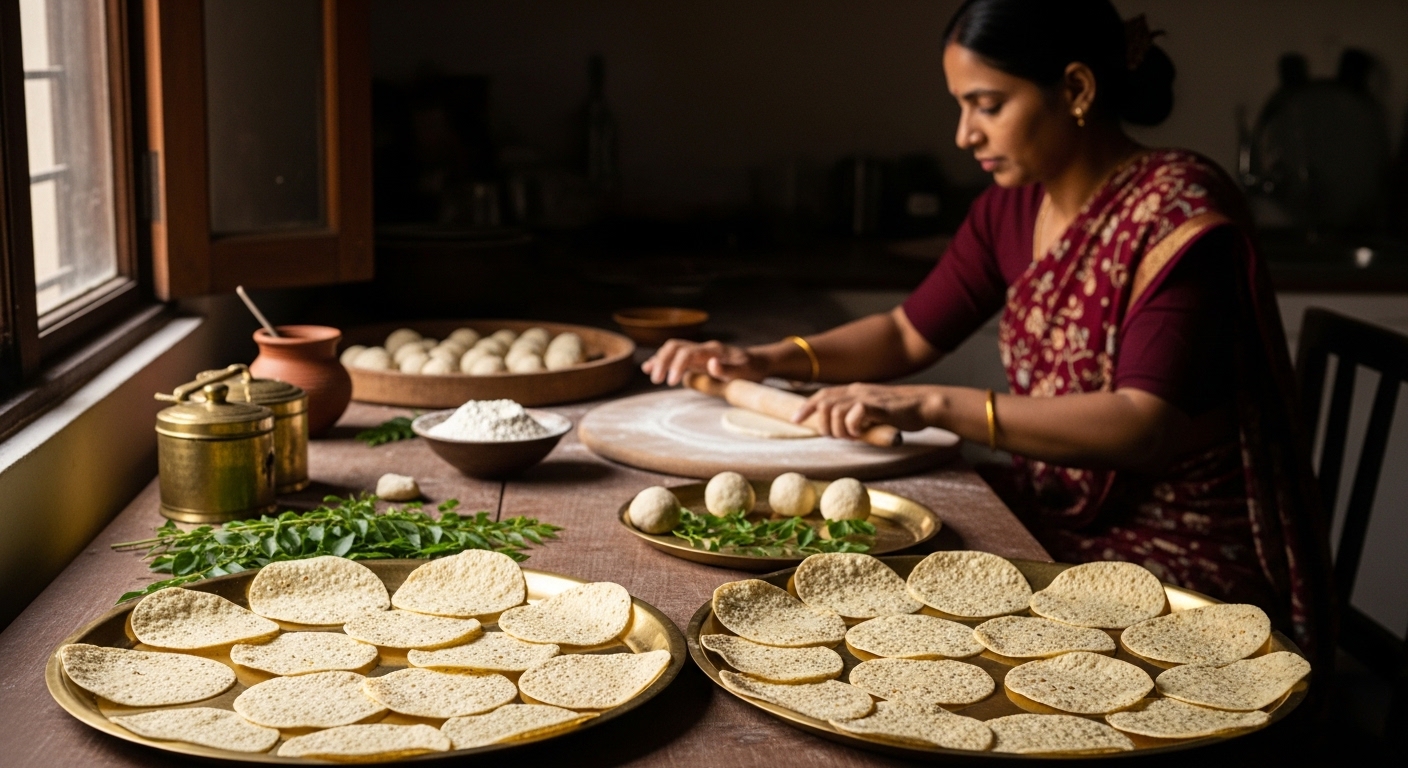
Start Best Papad Making Business – Complete Business Plan
Introduction
The papad-making business is a traditional and highly profitable home-based business that has been running successfully in India for generations. Papad is a staple food item consumed with daily meals, especially in households, restaurants, and during festivals. Due to its long shelf life, easy storage, and wide consumption, papad has a consistent demand throughout the year. Homemade papad is preferred by many customers because of its authentic taste, better quality, and absence of harmful preservatives. This business is ideal for housewives, self-help groups, and small entrepreneurs who want to start with low investment and build a stable source of income from home.
Business Information
The papad-making business involves preparing papads using ingredients like urad dal flour, moong dal flour, spices, salt, and oil. There are various types of papads, such as urad papad, moong papad, masala papad, rice papad, and regional varieties. The process includes dough preparation, rolling or pressing, drying, and packaging. Since papads are dried products, they can be stored for several months, making it easier to produce in bulk and sell gradually. You can start this business on a small scale from your home and expand as demand increases. The key factors for success are consistent quality, proper drying, hygiene, and attractive packaging.
Business Plan
To start a papad-making business, the first step is to decide the type of papad you want to produce. It is advisable to begin with one or two popular varieties, such as urad papad or masala papad and later expand your product range. You need to standardise your recipe to maintain uniform taste and quality. The production process should be planned carefully, including mixing ingredients, kneading dough, shaping papads, and drying them properly under sunlight or using drying machines. Drying is a critical step because moisture can spoil the product. Packaging should be done in airtight covers to maintain freshness and prevent breakage. Branding your papad with a unique name and label will help you stand out in the market. Pricing should be competitive while ensuring a good profit margin. Start selling in your local area and gradually expand your reach through shops and online platforms.
Startup Cost
The startup cost for a papad-making business is low to moderate, making it suitable for beginners. You can start with an investment of around ₹5,000 to ₹20,000, depending on the scale. If you already have a kitchen setup, your main expenses will include raw materials such as flour, spices, and oil. Additional costs include utensils, rolling boards, papad press (optional), drying cloths or trays, and packaging materials. If you want to increase production, you can invest in semi-automatic papad-making machines later. Initially, manual production is sufficient and cost-effective for small-scale operations.
Profit Margin
The papad-making business offers good profit margins because the production cost is relatively low compared to the selling price. On average, you can expect a profit margin of 30% to 50%. For example, if the cost of producing 1 kg of papad is ₹120 to ₹150, you can sell it for ₹200 to ₹300, depending on quality and packaging. Bulk orders from shops, restaurants, and catering services can further increase your profits. Since papads have a long shelf life, the risk of loss due to spoilage is minimal. Efficient production and proper storage can help maximise your earnings.
Marketing Strategy
Marketing plays an important role in growing your papad business. In the beginning, you can promote your products among friends, family, and neighbours. Offering free samples is an effective way to attract customers and build trust. Word-of-mouth marketing is very powerful, especially if your papads are tasty and of good quality. You can also use social media platforms like WhatsApp, Facebook, and Instagram to promote your products. Share photos, videos, and customer feedback to reach more people. Creating a WhatsApp group or broadcast list can help you update customers about new stock and offers. You can also supply your papads to local grocery stores, supermarkets, hotels, and restaurants. Participating in local markets and exhibitions can increase your visibility. Attractive and hygienic packaging will help you compete with branded products.
Target Audience
The target audience for a papad-making business is very wide. Almost every household consumes papad, making it a high-demand product. Your primary customers include families, restaurants, dhabas, and catering services. Small grocery shops and supermarkets are also important buyers, as they can purchase in bulk and sell to end customers. Students and bachelors living away from home also prefer papads as a quick and tasty addition to their meals. You can also target customers who prefer homemade and traditional food products. Understanding your audience will help you plan your production and marketing strategies effectively.
Operations and Management
Running a papad-making business requires proper planning and discipline. You need to ensure that all ingredients are fresh and of good quality. Maintaining cleanliness and hygiene during production is very important. The drying process should be handled carefully to avoid moisture and spoilage. Proper storage in dry and cool conditions is necessary to maintain product quality. You should also keep track of your inventory, orders, and expenses. As your business grows, you can hire helpers or involve family members in production. Time management is crucial, especially during bulk orders or peak seasons.
Growth Opportunities
The papad-making business has excellent growth potential. Once you establish a loyal customer base, you can expand your product range by introducing new varieties and flavours. You can also improve your branding by creating a unique logo and packaging design. Selling your products online through e-commerce platforms can help you reach customers beyond your local area. You can supply your papads to larger retail stores, hotels, and catering companies. With consistent quality and effective marketing, your small home-based business can grow into a well-known brand. Investing in machines and increasing production capacity can further boost your growth.
Conclusion
The papad-making business is a simple, low-investment, and profitable home-based business with strong and steady demand. It offers a great opportunity for individuals who want to start their own business from home and earn a regular income. By focusing on quality, hygiene, and customer satisfaction, you can build a successful and sustainable business. With proper planning and dedication, this traditional business can grow into a large and recognised brand, providing financial stability and long-term success.
- Tags:
- How to start a Papad business
- How To Start a Papad Business in India?
- How to start best papad making business from home in hindi
- How to start best papad making business from home in india
- How to start best papad making business from home in karnataka
- How to start best papad making business from home in maharashtra
- How to start Papad business at home
- How To Start Papad Making Business
- PAPAD business
- Papad business plan
- PAPAD MAKING
- Papad Making business Profit Margin
- Papad Making Cost Per kg
- Start a Profitable Papad Business
- Start Your Papad Making Business
